
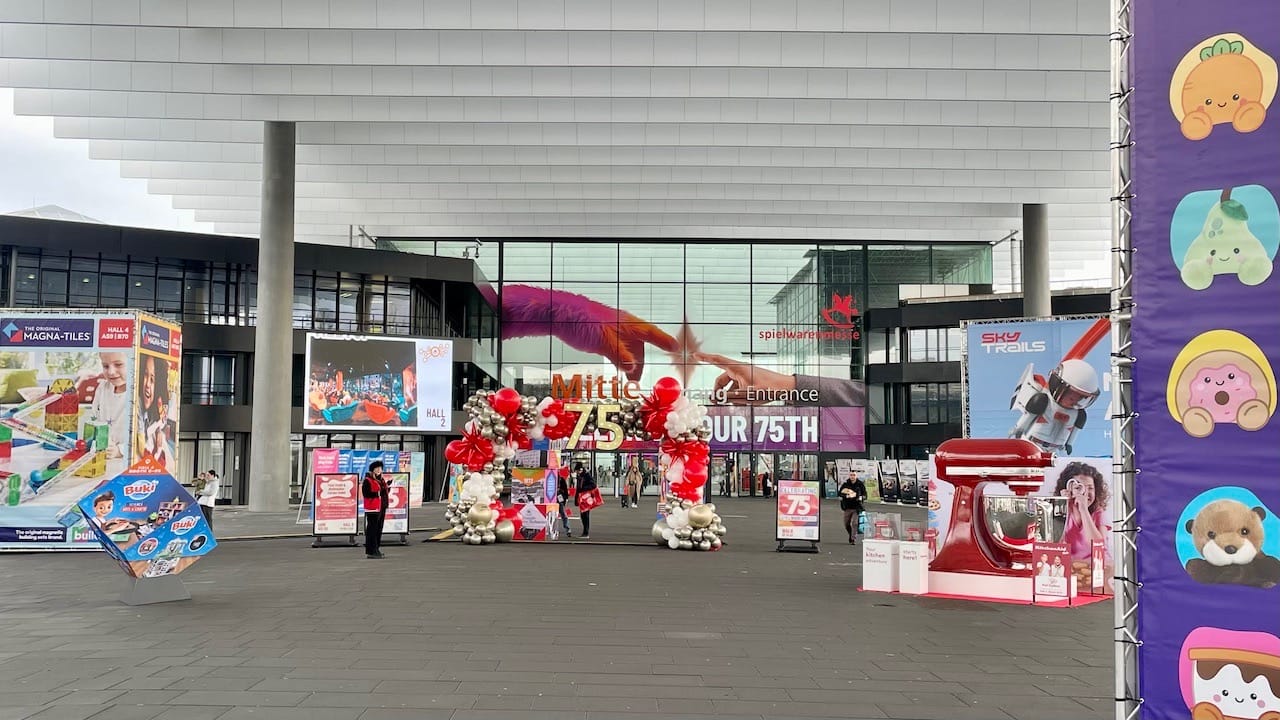
The 75th Spielwarenmesse 2026 ran January 27–31 in Nuremberg Germany, and as always, a few days on the floor reveals as much about where the toy industry is heading as it does about any individual product. Here are some observations from this year’s show.
General Impressions
The puzzle boom has certainly softened. Jigsaw puzzles were noticeably fewer in number and the booths that did carry them weren’t drawing heavy traffic. AI-generated imagery, over saturated colors, and licensed artwork dominated what puzzle product remained — not exactly inspiring.
Hall 1 dolls seemed mostly from Spanish manufacturers. Hall 3, traditionally the home of wooden toys, was only about two-thirds wooden toys this year, and the small-booth, small-company presence that once gave the hall its character has thinned considerably. Halls 3 and 7 both had sections curtained off, and some of the empty booth space has been converted into visitor lounges — a practical touch, complete with water bottle refill stations which is a very welcome addition for us North Americans.
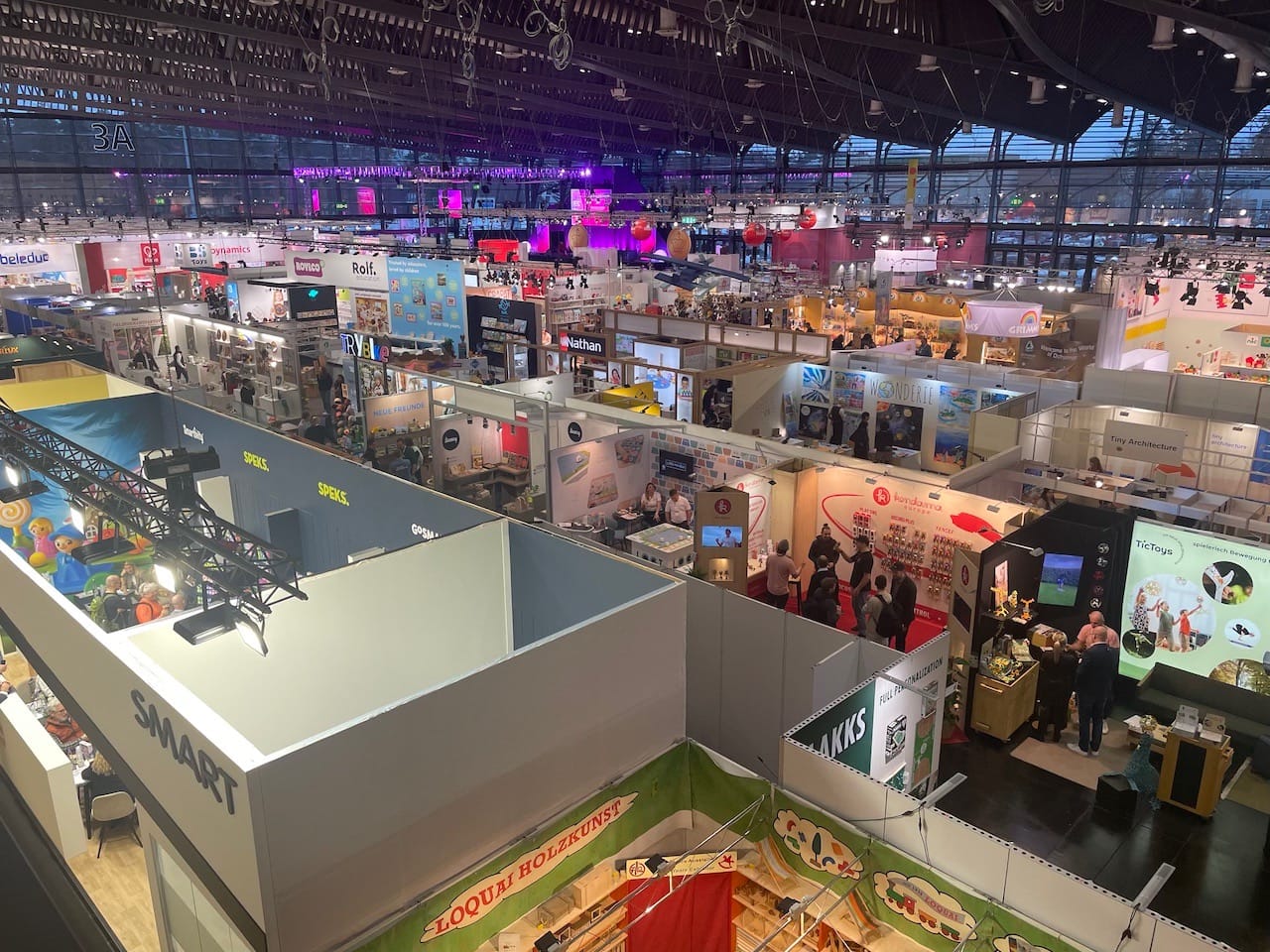
Hall 3C felt crowded in a different way. There is enormous competition in the baby and toddler play space, and it is hard to imagine everyone there turning a profit. As parents have pivoted to screens, the age range of children playing with toys has compressed noticeably, forcing these companies to chase a shrinking market.
The Mood Around US Trade
No conversation about business went very long before the subject of US politics came up. European exhibitors were largely bewildered — sometimes laughing, sometimes just shaking their heads — at the pace of events in Washington. The consistent refrain was amazement that the most powerful office in the world seems to operate against business and without meaningful pushback from within its own party.
On the trade side, there is still real interest in the US market, but zero appetite to absorb tariff costs or offer incentives. The position was consistent across conversations: import costs land on the US importer, full stop. Anyone expecting European suppliers to share that burden will be disappointed.
Sustainable and Organic Toys — A Tough Value Proposition
The natural, organic, and sustainable toy category is facing a hard truth: when a shopper is faced with two similar items and the sustainable option costs more, they typically choose the cheaper one. That dynamic is grinding on businesses throughout the segment.
Compounding the pressure is stiff competition from well-funded brands offering decent quality at low prices. A few exhibitors floated the idea of pivoting toward adjacent markets — pet toys among them, given that younger consumers may be more likely to spend on pets than on children’s products. Whether that’s a genuine opportunity or a sign of the strain in the category is an open question.
EU Toy Safety Regulation — What’s Changing
A seminar on the new EU Toy Safety Regulation drew good attendance and interest. The regulation is active now, with full compliance required by August 2030. The headline changes:
- Digital Product Passport — required for all toys
- New chemical restrictions
- Updated acoustics standards
- Revised labeling requirements
- New roles defined for fulfillment centers and online marketplaces in Europe